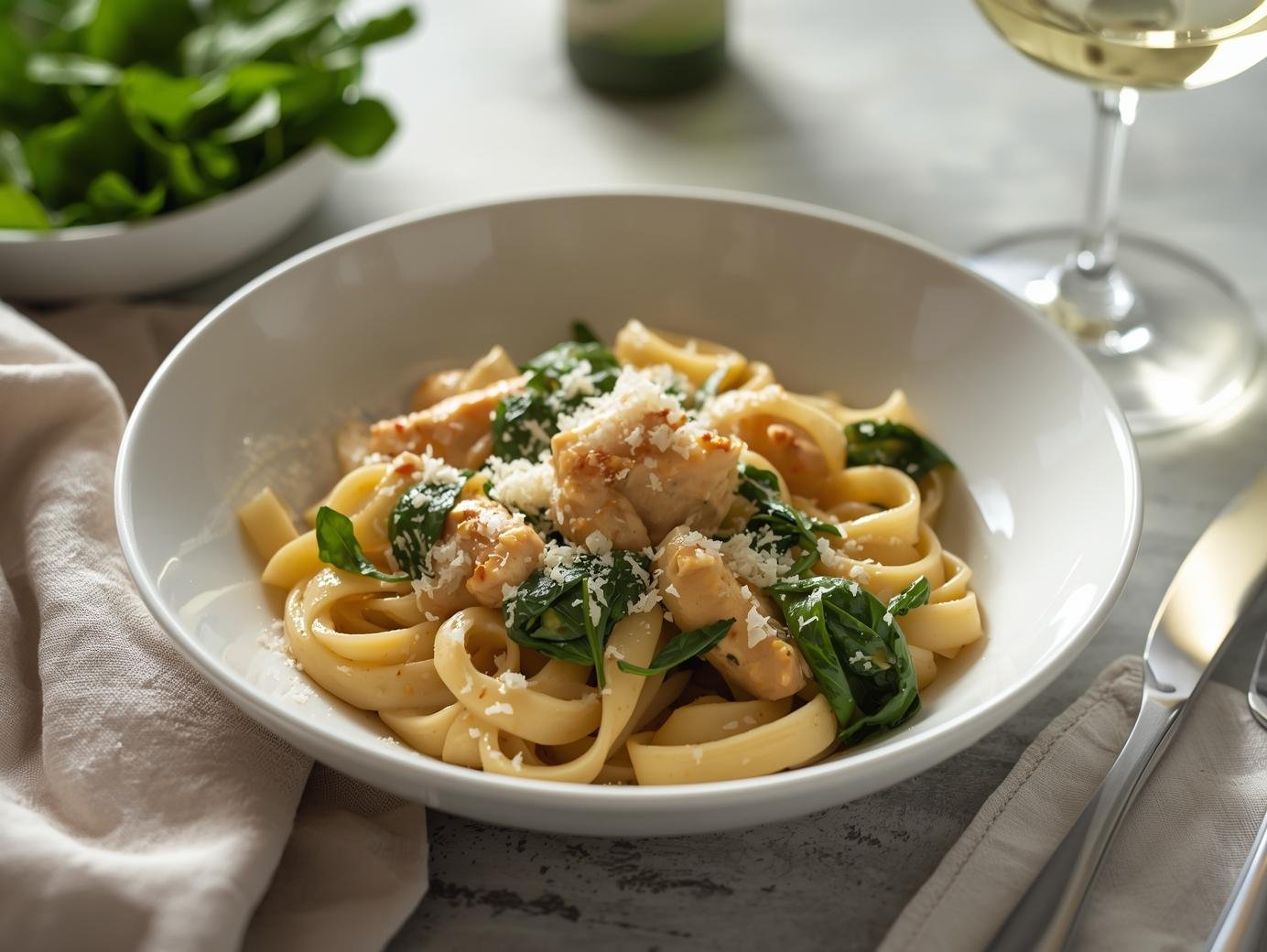
Find out the best techniques for cooking chicken florentine pasta with a smooth, creamy sauce.
There’s something undeniably comforting about twirling creamy pasta around your fork on a busy weeknight. When that pasta comes loaded with tender chicken, vibrant spinach, and a velvety sauce that clings to every bite, you’ve got yourself a winner. Chicken florentine pasta has become one of those recipes I turn to again and again not just because it tastes restaurant-quality, but because it comes together in less time than it takes to scroll through takeout menus.
A memory still stands out of the very first time I prepared this dish. I was craving something indulgent but didn’t want to spend hours in the kitchen. What started as a simple experiment with pantry staples turned into a family favorite that now makes regular appearances at our dinner table. The best part? Once you understand the techniques behind that signature creamy sauce, you can make this recipe your own in countless ways.
Table of Contents
What Makes Chicken Florentine Pasta So Irresistible
The magic of chicken florentine pasta lies in its simplicity. At its heart, this dish is about quality ingredients working together in harmony. The term “Florentine” typically indicates the presence of spinach, a nod to the Italian city of Florence where spinach dishes have long been celebrated. When you combine that earthy spinach with juicy chicken and a rich, garlicky cream sauce, you get layers of flavor that feel sophisticated without being fussy.
What I love most is how the sauce transforms ordinary ingredients into something special. It’s not just about dumping cream into a pan there’s a technique to getting that silky, smooth consistency that coats the pasta perfectly without feeling heavy. The sauce should be luxurious enough to feel like a treat, but balanced enough that you actually want to finish your plate.
The chicken adds protein and substance, making this a complete meal in one bowl. Meanwhile, the spinach brings a pop of color and a subtle earthiness that cuts through the richness. It’s comfort food that doesn’t leave you feeling weighed down.
Breaking Down Your Ingredients
Let me walk you through what you’ll need and why each component matters. I’ve learned through trial and error that small choices in ingredients can make a big difference in your final dish.
Chicken: I typically reach for boneless, skinless chicken breasts because they’re lean and cook quickly. That said, chicken thighs are an excellent alternative if you prefer darker meat they stay juicier and are more forgiving if you slightly overcook them. Cut your chicken into bite-sized pieces, about one-inch cubes. This helps everything cook evenly and makes each bite more enjoyable, so every forkful includes a balanced mix of flavors.
Pasta: Short pasta shapes work beautifully here. Penne, rigatoni, or farfalle are my go-to choices because their shapes catch and hold the sauce. I’ve also had great success with fettuccine if you’re in the mood for long noodles. The key is choosing pasta with enough surface area or crevices to grab onto that creamy sauce.
Spinach: Fresh spinach is ideal and wilts down beautifully in the hot sauce. You’ll be amazed at how much fresh spinach reduces what looks like a mountain in the bag becomes just the right amount once cooked. If you’re using frozen spinach, make sure to thaw it completely and squeeze out as much liquid as possible. Excess water will thin your sauce and make it watery.
Cream and Dairy: Heavy cream creates that signature richness, but I’ve found that a combination of heavy cream and chicken broth strikes the perfect balance. The broth adds depth without making the sauce too thick. Some Parmesan cheese at the end brings a salty, nutty complexity that ties everything together.
Aromatics and Seasonings: Garlic is non-negotiable I use at least four cloves, sometimes more. Onion or shallots add sweetness. Italian seasoning, salt, pepper, and a pinch of red pepper flakes round out the flavor profile. Don’t skip the red pepper flakes; even if you’re not into spicy food, a tiny pinch adds dimension without heat.
The Step-by-Step Process
Let me guide you through making chicken florentine pasta from start to finish. This isn’t one of those recipes where you need to watch ten things at once it’s actually pretty straightforward once you get the flow down.
Start by getting your pasta water going.Bring a large pot of well-salted water to a rolling boil—it should be well seasoned. While the water heats, get the rest of your ingredients ready.
Season the chicken with salt, pepper, and a touch of Italian seasoning. Warm a large skillet over medium-high heat with olive oil or butter. When the pan is hot, place the chicken in a single layer, cooking in batches if necessary to avoid crowding. Let it brown nicely on the outside, turning once, and cook for about 5–6 minutes until fully done and reaching an internal temperature of 165°F. Transfer the chicken to a plate and set it aside.
By now your pasta water should be boiling. Add your pasta and cook according to package directions until al dente. Remember to reserve at least a cup of pasta water before draining this starchy liquid is liquid gold for adjusting your sauce consistency later.
While the pasta cooks, work on your sauce. In the same skillet you used for the chicken (don’t wash it those browned bits are flavor!), reduce the heat to medium and add a bit more butter or oil if the pan looks dry. Sauté your minced garlic and diced onion until fragrant and softened, about 2-3 minutes. Be careful not to burn the garlic.
Now comes the sauce-building. Pour in your chicken broth and use a wooden spoon to scrape up any browned bits from the bottom of the pan. This deglazing step adds tremendous flavor. Let the broth simmer for a minute or two, then reduce the heat to medium-low and stir in your heavy cream. This is where patience pays off you want the sauce to gently simmer and reduce slightly, but not boil aggressively.
Add your fresh spinach in handfuls, stirring as it wilts down. This only takes a minute or two. Once the spinach is wilted, stir in your grated Parmesan cheese. The cheese will melt into the sauce, adding body and flavor.
Add the cooked chicken back into the skillet with the drained pasta. Gently toss everything so the sauce evenly coats the noodles. If the sauce feels too thick, gradually stir in a bit of the reserved pasta water until it reaches the perfect texture.
The pasta water’s starch will help the sauce cling to the noodles.
Taste and adjust your seasoning. This is your chance to add more salt, pepper, or a squeeze of lemon juice for brightness.
Mastering the Creamy Sauce
The sauce can make or break this dish, so let’s talk technique. The number one mistake people make is cooking over too high heat. When cream gets too hot too quickly, it can break or curdle, leaving you with a grainy, separated mess instead of that silky texture you’re after.
Keep your heat at medium or medium-low once you add the cream. A gentle simmer is what you’re looking for you should see small bubbles around the edges, but not a rolling boil. This allows the sauce to thicken naturally through reduction without any risk of curdling.
Another trick I’ve learned is to let your cream come to room temperature before adding it to the pan. Cold cream hitting a hot pan can cause temperature shock. If you forget to take it out early, just microwave it for 15-20 seconds to take the chill off.
The Parmesan cheese should be freshly grated from a block, not the pre-grated stuff in the canister. Fresh Parmesan melts smoothly into the sauce, while pre-grated cheese often contains anti-caking agents that can make your sauce grainy. Add the cheese off the heat or on very low heat, stirring constantly until it’s fully incorporated.
If your sauce does get too thick, pasta water is your best friend. Add it gradually, a few tablespoons at a time, stirring between additions. The starch in the pasta water helps create a cohesive, clingy sauce that’s neither too thick nor too thin.
Choosing the Right Pasta and Chicken
I’ve experimented with different pasta shapes, and while personal preference plays a role, some options definitely work better than others. Penne is probably my most-used choice those ridges and hollow center trap the sauce beautifully. Rigatoni is similar but larger, which is great if you want more substantial bites.
Farfalle (bow-tie pasta) is wonderful for this dish too. The folded shape creates little pockets that hold onto the creamy sauce. Fettuccine or linguine work if you prefer long noodles, though you’ll want to cut or shred your chicken into smaller pieces so they distribute evenly throughout the pasta.
As for chicken, I stand by boneless, skinless breasts for convenience, but don’t sleep on thighs. Thigh meat has more fat, which means more flavor and a more tender result. It’s also harder to dry out, which makes it forgiving for less experienced cooks. If you’re feeling ambitious, you could even use rotisserie chicken from the store. Just shred it and add it at the end you’ll skip the chicken-cooking step entirely and still get great flavor.
Some folks like to butterfly their chicken breasts to make them thinner and more even, which leads to more uniform cooking. You can also gently flatten the pieces so they have an even thickness. Personally, I find cutting them into cubes easier and just as effective.
Creative Variations to Try
After getting the hang of the basic recipe, you can experiment with countless variations. Here are some of my favorite ways to shake things up:
One-Pan Chicken Florentine Pasta: This version eliminates the need to boil pasta separately. Brown your chicken, then remove it. Build your sauce in the same pan, add uncooked pasta and enough liquid (broth and cream) to cover. Let the pasta cook right in the sauce, stirring occasionally. The pasta releases starch directly into the sauce, making it extra creamy. You’ll need to watch the liquid level and add more broth if things get too dry. It takes a bit longer but creates fewer dishes.
Chicken Florentine Pasta Without Cream: If you’re looking for a lighter version, you can swap heavy cream for a combination of Greek yogurt and milk, or use half-and-half. My favorite lightened-up version uses a mix of chicken broth and cream cheese. The cream cheese melts into a surprisingly luscious sauce with fewer calories than heavy cream. You could also go completely dairy-free with coconut cream, though this will add a subtle coconut flavor.
Mushroom Florentine Pasta: Add sliced mushrooms along with the onions and garlic. Cremini, baby bella, or even shiitake mushrooms add an earthy depth that complements the spinach beautifully. For a vegetarian version, simply omit the chicken and load up on mushrooms instead.
Sun-Dried Tomato Chicken Florentine: Chop up some oil-packed sun-dried tomatoes and stir them in with the spinach. The sweet-tart flavor cuts through the cream and adds a nice pop of color. Use a bit of the oil from the tomato jar for sautéing it’s packed with flavor.
Baked Chicken Florentine Pasta: Transfer your pasta mixture to a baking dish, top with mozzarella and extra Parmesan, and bake at 375°F for 20-25 minutes until bubbly and golden. This turns the dish into a comforting casserole that’s perfect for feeding a crowd or meal-prepping.
What to Serve Alongside
Chicken florentine pasta is hearty enough to stand on its own, but I like to round out the meal with a few simple sides. A fresh green salad dressed with a zesty lemon vinaigrette adds a light, refreshing balance to the rich, creamy pasta. The acidity cuts through the richness and cleanses your palate between bites.
Garlic bread is always a hit, and let’s be honest it’s perfect for soaking up any leftover sauce on your plate. I make a quick version by spreading butter mixed with minced garlic and parsley on sliced baguette, then toasting it in the oven until golden.
Roasted vegetables like asparagus, green beans, or broccoli add color and nutrition without much effort. Toss them with olive oil, salt, and pepper, then roast at 425°F while you make the pasta.
If you want something lighter, steamed or sautéed green beans with lemon and almonds complement the dish nicely. The crunch of the almonds adds textural contrast.
Storage and Reheating Tips
Leftovers actually reheat pretty well, which isn’t always the case with cream-based pasta dishes. Keep the cooled pasta in a sealed container in the fridge, where it will stay fresh for 3 to 4 days.
When reheating, the key is adding a bit of liquid to revive the sauce. The pasta will have absorbed some sauce while sitting, so it might look a bit dry straight from the fridge. Add a splash of chicken broth, milk, or even water to the pasta before reheating. Heat it gently on the stovetop over medium-low heat, stirring frequently, until warmed through. You can also reheat individual portions in the microwave use 50% power and heat in 1-minute intervals, stirring between each, until hot.
The sauce might separate slightly after refrigeration. Don’t panic! Gentle reheating with a bit of added liquid and some stirring will usually bring it back together.
For meal prep, I sometimes prepare all the components separately and combine them the night I’m eating. Cook the pasta, chicken, and sauce, then store them in separate containers. This prevents the pasta from getting too soft from sitting in sauce. Just heat and combine when you’re ready to eat.
I don’t recommend freezing this dish, as cream sauces tend to separate and become grainy when frozen and thawed. If you must freeze it, expect some texture changes and plan to stir in fresh cream when reheating.
Common Mistakes and How to Fix Them
Let me share some pitfalls I’ve encountered so you can avoid them.
Dry, overcooked chicken: This happens when you cook the chicken over too high heat or for too long. Remember, the chicken will continue cooking slightly from residual heat even after you remove it from the pan. Pull it just before it looks completely done. Using a meat thermometer takes the guesswork out you’re aiming for 165°F.
Watery sauce: This usually comes from not draining spinach properly (if using frozen) or adding too much liquid. If the sauce seems too watery, allow it to simmer uncovered for a few more minutes to thicken. You can also stir in a bit more Parmesan, which will thicken as it melts.
Grainy or separated sauce: This happens when the cream gets too hot or when you add cheese to a boiling sauce. Always reduce heat before adding cream, and remove from heat entirely before stirring in Parmesan. If your sauce has already separated, sometimes whisking in a bit of cold cream can help bring it back together.
Bland flavor: Underseasoning is common when you’re worried about overdoing it. Cream-based sauces need a generous amount of salt to taste balanced. Keep tasting and adjusting. Garlic, Parmesan, and black pepper should all be assertive enough to shine through the cream.
Clumpy pasta: This happens when pasta sits in a thick sauce without enough liquid to keep things loose and creamy. Always reserve pasta water and use it to adjust consistency. The dish should look slightly saucy, not dry.
YOU CAN SEE ALSO : Discover the step-by-step method for making chicken florentine soup at home.
Frequently Asked Questions
Can I make this dish ahead of time?
Yes, but with some modifications. You can prep all your ingredients in advance cut the chicken, measure out ingredients, grate cheese and store them in the fridge until you’re ready to cook. I don’t recommend cooking the full dish more than an hour before serving, as the pasta will absorb the sauce and the texture won’t be quite as good. If you must make it ahead, slightly undercook the pasta and keep the sauce on the thinner side.
What can I substitute for heavy cream?
Half-and-half works but will give you a thinner sauce. You may need to let the sauce simmer a little longer if it hasn’t thickened enough. For a dairy-free option, full-fat coconut milk works well, though it gives a subtle coconut taste. If you want a lower-calorie version, stir in Greek yogurt off the heat at the end to avoid curdling, or melt some cream cheese into the chicken broth for extra creaminess.
How do I prevent the spinach from making the dish watery?
When using fresh spinach, add it just before serving and allow it to wilt briefly; it releases very little liquid. For frozen spinach, it’s important to drain it thoroughly. Make sure it’s fully thawed, then squeeze out the excess water by hand or press it in a fine-mesh strainer to remove as much moisture as possible.
Can I use pre-cooked chicken?
Absolutely. Rotisserie chicken from the grocery store is perfect for this. Shred or cube it and add it at the end when you toss the pasta with the sauce. You’ll just need to heat it through. This is a great time-saver for busy weeknights.
Why is my sauce not sticking to the pasta?
The sauce needs starch to cling properly. Make sure you’re tossing the pasta with the sauce while the sauce is still hot, and use some of that reserved pasta water. The starch in the water acts as a binding agent. Also, don’t rinse your pasta after draining you want that starchy coating on the noodles.
What wine pairs well with this dish?
A crisp white wine like Pinot Grigio or Sauvignon Blanc complements the creamy sauce without overwhelming the delicate flavors. If you prefer red, go with something light like Pinot Noir.
Final Thoughts
Chicken florentine pasta has earned its place in my regular dinner rotation, and I think it might just earn a spot in yours too. It’s the kind of recipe that feels special enough for guests but simple enough for a random Tuesday night when you need something satisfying on the table fast.
The charm of this recipe is in how versatile it is Once you understand the basic technique properly cooked chicken, a smooth creamy sauce, and well-timed pasta you can adapt it to your taste or whatever you have on hand. Missing spinach? Use kale or arugula. Want more vegetables? Throw in mushrooms, tomatoes, or peas. Need to stretch it further? Add extra pasta or serve it with crusty bread.
Most importantly, don’t be intimidated by cream sauces. Yes, they require a bit of attention, but they’re not as finicky as their reputation suggests. Keep your heat moderate, stir with confidence, and trust the process. Before you know it, you’ll be serving up restaurant-quality pasta in your own kitchen.
Give this recipe a try this week and let me know how it turns out. And if you put your own spin on it, I’d love to hear what you did differently. Happy cooking!