Learn how Creamy Chicken Florentine is traditionally prepared and what ingredients define the dish
You’re about to start a journey into the world of Creamy Chicken Florentine. This dish is loved by many for its rich taste and tender chicken. It’s a key part of Florentine cuisine.
As you explore Florentine cooking, you’ll see how to make this tasty dish. It mixes simple chicken with spinach and creamy sauces. This creates a truly satisfying meal.
Key Takeaways
- Understand the traditional preparation methods of Creamy Chicken Florentine.
- Learn the key ingredients that define this beloved dish.
- Discover how to combine chicken, spinach, and creamy sauces for a rich flavor profile.
- Explore the cultural significance of Florentine cuisine.
- Gain insights into making a delicious chicken florentine recipe.
Table of Contents
The Origins and History of Chicken Florentine
Chicken Florentine’s history is a tale of culinary growth and change. This dish, famous for its creamy sauce and spinach, comes from Italy’s rich food traditions.
The Meaning of “Florentine” in Culinary Terms
Florentine” refers to dishes from or inspired by Florence, Italy. In cooking, it means the dish includes spinach, reflecting the region’s love for it. Spinach was a big deal in Florentine food because it was so common there.
How Chicken Florentine Evolved into a Classic Dish
Chicken Florentine started as a twist on old Florentine recipes, with chicken as the star. It quickly became popular around the world, with chefs making it their own. The creamy sauce, a key part of the dish, was added later, making it even more delicious. Now, Chicken Florentine is a favorite, loved for its warm and elegant taste.
What Defines Authentic Creamy Chicken Florentine
Authentic Creamy Chicken Florentine is all about balance. It combines chicken, spinach, and a creamy sauce. This mix creates a dish that’s both rich and fresh.
Traditional Characteristics of the Classic Recipe
The classic recipe is famous for its rich and creamy sauce. It’s made with heavy cream, garlic, and a hint of nutmeg. The chicken is tender, and the spinach adds a fresh touch.
As a culinary expert notes, “The key to a great Florentine is in the balance of its components.”
“A good Florentine sauce is like a warm hug; it’s comforting and rich, with a depth of flavor that comes from careful preparation.”
Chef’s Insight
Regional Variations and Interpretations
Over time, regional twists have appeared. Some add mushrooms or sun-dried tomatoes. Others use lighter cream sauces. These changes show how versatile Creamy Chicken Florentine can be.
The Importance of Balance in Flavors
Authentic Creamy Chicken Florentine is all about balance of flavors. The cream, chicken, and spinach must blend perfectly. This balance makes the dish satisfying and memorable.
By understanding these elements, you can make your own version of Creamy Chicken Florentine. It can be tailored to your taste while staying true to the traditional recipe.
Essential Ingredients for Creamy Chicken Florentine
The key to a delicious creamy garlic chicken florentine is in its ingredients. You’ll need a few important items to make it right.
The Chicken Component: Best Cuts and Quality
For homemade chicken florentine, choose high-quality chicken. Boneless, skinless chicken breasts are great because they cook fast and are soft.
The Spinach Element: Fresh vs. Frozen Considerations
Spinach is vital in Chicken Florentine. You can pick fresh or frozen spinach. Fresh spinach tastes brighter, but frozen is easier to use and still full of nutrients.
The Cream Base: Heavy Cream and Alternatives
The creamy sauce is what makes this dish special. Heavy cream is the classic choice. But, you can also use half-and-half or a mix of milk and cream for a lighter taste.
Supporting Ingredients: Garlic, Shallots, and Aromatics
Garlic, shallots, and other aromatics bring out the dish’s flavor. Use fresh garlic and shallots for the best taste. Other ingredients like lemon juice, nutmeg, and Parmesan cheese also add to the dish.
| Ingredient | Recommended Choice | Alternative |
| Chicken | Boneless, skinless chicken breasts | Chicken thighs |
| Spinach | Fresh spinach | Frozen spinach |
| Cream Base | Heavy cream | Half-and-half or milk and cream mixture |
Traditional Preparation Method for Creamy Chicken Florentine
Making Creamy Chicken Florentine is all about blending flavors and textures. It’s a mix of tender chicken, spinach, and a creamy sauce. All these elements come together beautifully.
Preparing and Cooking the Chicken
First, you need to prepare the chicken. Boneless, skinless chicken breasts are best for their tenderness. Season the chicken with salt, pepper, and herbs before searing it in a hot pan. Cook until it’s golden and done.
Properly Wilting the Spinach
While the chicken cooks, start wilting the spinach. Use fresh spinach for the best results. Add it to the pan with chicken juices and cook until just wilted. Avoid overcooking to keep the spinach fresh.
Creating the Signature Florentine Sauce
The Florentine sauce is key to the dish’s flavor. Start by sautéing garlic and shallots in butter. Then, add heavy cream and simmer until it thickens. Stir in Parmesan cheese until smooth. This rich and creamy sauce is the heart of the recipe.
Combining Components for the Final Dish
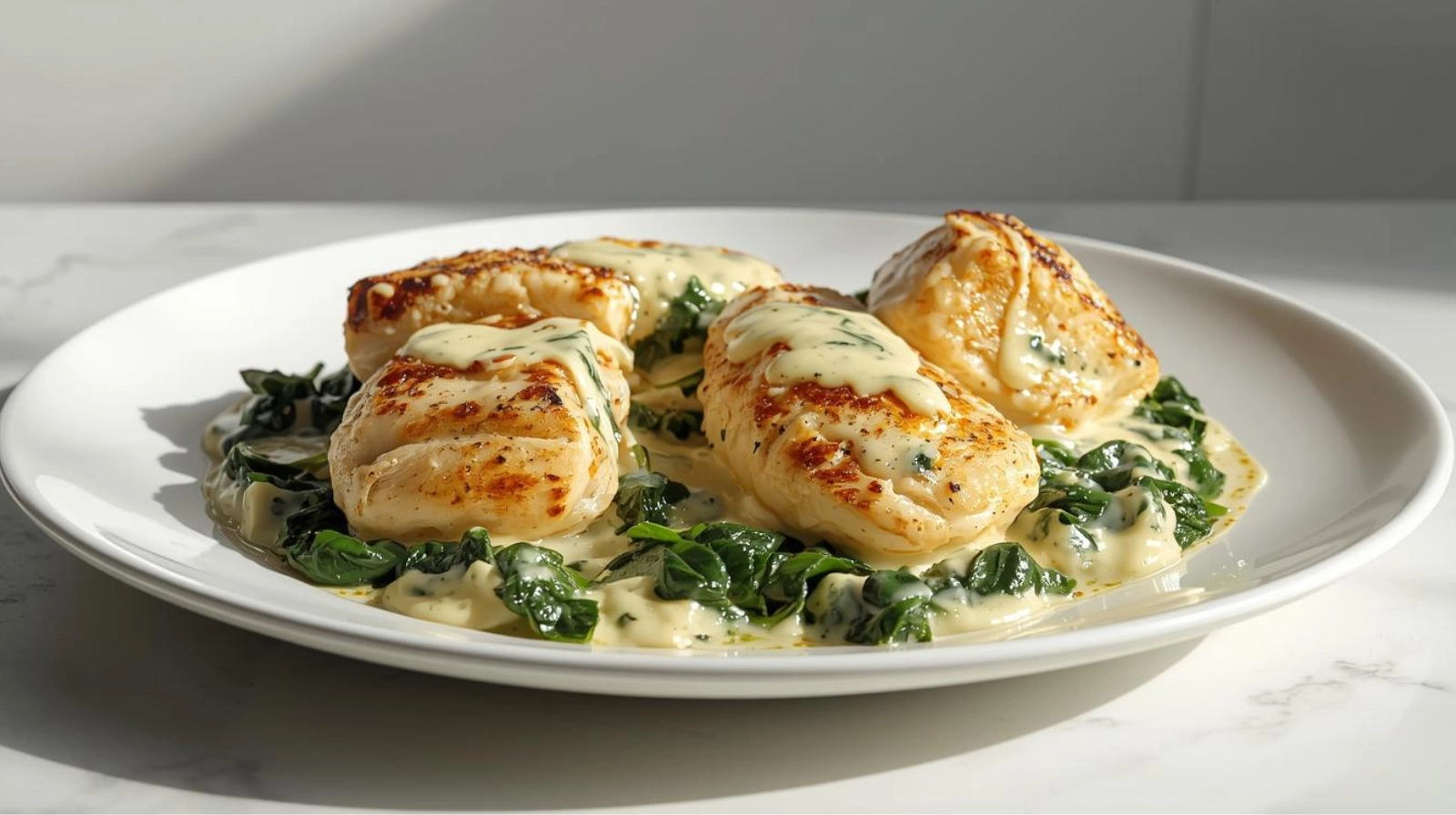
When everything is ready, combine the chicken, spinach, and sauce. Slice the chicken and place it on the spinach. Spoon the sauce over the top. This method ensures your dish is both beautiful and flavorful.
Step-by-Step Recipe for Classic Creamy Chicken Florentine
Here’s a simple, step-by-step guide to creating a mouth-watering Creamy Chicken Florentine.
Ingredient Measurements and Preparation
To start, gather the following ingredients:
- 1 1/2 pounds boneless, skinless chicken breasts, cut into 1-inch pieces
- 2 cloves of garlic, minced
- 1 cup fresh spinach leaves
- 1 cup heavy cream
- 1/2 cup grated Parmesan cheese
- 1 tsp dried thyme
- Salt and pepper, to taste
- 2 tbsp olive oil
Make sure the chicken reaches room temperature before cooking. This helps it cook evenly. Mince the garlic and grate the Parmesan cheese. Also, wash and dry the spinach leaves.
Cooking Process with Timing Guidelines
- Heat 1 tablespoon of olive oil in a large skillet over medium-high heat. Add the chicken and cook for 5–7 minutes, or until browned and cooked through. Transfer the chicken to a plate and set aside.
- In the same skillet, add the remaining 1 tablespoon of olive oil. Stir in the minced garlic and cook for 1 minute until fragrant.
- Pour in the heavy cream and bring to a gentle simmer. Cook for 2–3 minutes, allowing it to thicken slightly.
- Stir in the Parmesan cheese until melted and smooth. Season with thyme, salt, and pepper.
- Add the fresh spinach leaves to the skillet and cook until wilted, about 1-2 minutes.
- Return the cooked chicken to the skillet and stir to coat with the creamy Florentine sauce.
Final Assembly and Garnishing
To serve, place the chicken and sauce on a plate. Garnish with additional Parmesan cheese and thyme if desired.
| Ingredient | Quantity |
| Chicken Breasts | 1 1/2 pounds |
| Garlic | 2 cloves |
| Fresh Spinach | 1 cup |
| Heavy Cream | 1 cup |
| Parmesan Cheese | 1/2 cup |
Key Techniques for Perfecting Your Creamy Chicken Florentine
To make your homemade chicken florentine better, learn these key cooking techniques. They will greatly improve your dish.
Properly Searing the Chicken for Maximum Flavor
Searing the chicken is key to better flavor in your creamy garlic chicken florentine.Make sure the pan is hot before adding the chicken.. Also, don’t put too much chicken at once for a perfect sear.
- Heat a skillet until hot, then add a small amount of oil.
- Sear the chicken until it forms a golden-brown crust.
- Avoid moving the chicken too much to allow for even browning.
Achieving the Ideal Sauce Consistency
The sauce is what makes Creamy Chicken Florentine special. To get it just right, balance the cream and cooking time.
- Start with a moderate amount of cream and adjust as needed.
- Simmer the sauce gently to prevent it from breaking.
- Reduce the sauce if it becomes too thin.
Timing and Temperature Control
Timing and temperature control are crucial for creamy garlic chicken florentine. Cook the chicken to a safe internal temperature. Also, watch the sauce’s simmering time.
- Cook chicken to an internal temperature of 165°F (74°C).
- Monitor the sauce’s temperature to avoid boiling.
- Adjust cooking times based on the thickness of the chicken.
Common Variations of Creamy Chicken Florentine
Creamy Chicken Florentine is a dish that can be made in many ways. It suits different tastes and dietary needs. This classic recipe has inspired many creative versions, from comforting casseroles to lighter, healthier dishes.
Pasta-Based Chicken Florentine
Serving Creamy Chicken Florentine over pasta is a popular choice. You can use fettuccine or linguine. This adds a satisfying carb component and helps soak up the rich sauce. Just cook your pasta, then top it with the Creamy Chicken Florentine.
Baked Chicken Florentine Casserole
Turning Creamy Chicken Florentine into a baked casserole is a great idea. Layer the chicken, spinach, and sauce in a dish. Top it with cheese and breadcrumbs for a crispy finish. It’s perfect for family dinners or special occasions.
Lighter Versions with Reduced Cream
Want a lighter version? You can use less heavy cream or substitute it with half-and-half or Greek yogurt. This keeps the creamy texture but cuts calories.
International Adaptations of the Classic
Creamy Chicken Florentine can also get an international twist. Try adding soy sauce or ginger for an Asian flavor. Experimenting with herbs and spices can create a fusion cuisine version.
Wine and Flavor Pairings for Creamy Chicken Florentine
Make your meal better by pairing Creamy Chicken Florentine with the right wine and flavors. The dish’s creamy sauce, tender chicken, and spinach create a rich taste. Thoughtful pairings can make these flavors even better.
Complementary Herbs and Seasonings
Adding herbs and seasonings can boost the taste of Creamy Chicken Florentine. Fresh thyme and parsley bring a fresh taste. A bit of nutmeg adds warmth, and paprika adds a smoky flavor.
Wine Selection for Serving and Cooking
For wine, a dry white like Chardonnay or Pinot Grigio pairs well with the creamy sauce. It doesn’t overwhelm the chicken. For cooking, a dry white wine can enrich the sauce’s flavor.
Creating a Complete Menu Around the Dish
To make a complete menu, pair Creamy Chicken Florentine with roasted veggies or a green salad. Crusty bread or garlic bread are great sides. For a fancy dinner, start with a light soup or antipasto, then serve the chicken as the main dish.
Troubleshooting Common Issues When Making Creamy Chicken Florentine
When making homemade chicken florentine, you might face some challenges. Knowing these issues can help you avoid them. This way, you can enjoy a smooth and tasty cooking experience.
Preventing Sauce Separation
Sauce separation is a common issue in creamy dishes like chicken florentine. To avoid it, slowly add the cream to the hot pan. Don’t let the sauce boil after adding the cream, as it can separate.
Fixing Overcooked or Dry Chicken
Overcooked chicken can be dry and tough. Use a thermometer to check the chicken’s internal temperature. It should be 165°F (74°C) for breast meat and 180°F (82°C) for thighs. If it’s overcooked, slice it thinly and serve with extra sauce to hide the dryness.
| Issue | Prevention | Fix |
| Sauce Separation | Temper cream gradually, avoid boiling | Reheat gently, whisk constantly |
| Overcooked Chicken | Use a thermometer, don’t overcook | Slice thinly, add extra sauce |
| Watery Spinach | Drain excess moisture, cook until wilted | Squeeze out excess water, recook |
Addressing Watery Spinach Problems
Watery spinach can make your chicken florentine less flavorful. To fix this, drain the spinach well before adding it. If using frozen spinach, squeeze out as much water as you can before adding it to the recipe.
Balancing Flavors When Something Is Off
If your dish tastes off, it might need flavor balancing. Taste and adjust as you go. Add more seasoning, salt, or a squeeze of lemon juice to balance the flavors. For creamy garlic chicken florentine, a squeeze of fresh lemon juice can make it brighter and more balanced.
Make-Ahead and Storage Tips for Creamy Chicken Florentine
Creamy Chicken Florentine is great for busy days or special events.This dish can be prepared in advance, then refrigerated or frozen. This makes it perfect for any occasion.
Proper Refrigeration Methods
Cool the Creamy Chicken Florentine to room temperature in two hours. Then, store it in an airtight container. It stays fresh in the fridge for up to 3 days.Just reheat it when you’re ready.
Reheating Without Compromising Quality
Reheat it gently over low heat. Add a bit of cream if the sauce is too thick. This keeps the creamy texture of a top chicken florentine recipe.
Freezing Guidelines and Best Practices
To freeze, cool the dish completely. Then, put it in an airtight, freezer-safe container. It can stay frozen for up to 3 months. Thaw it in the fridge overnight before reheating. It’s an easy chicken florentine meal solution.
Serving Suggestions and Accompaniments for Creamy Chicken Florentine
Looking to make your meal special? Try adding sides and presentation ideas to your Creamy Chicken Florentine. The right touches can turn this dish into a memorable feast.
Traditional Side Dishes
Classic choices like steamed veggies, sautéed asparagus, or a simple green salad pair well. They offer a nice contrast to the dish’s rich flavors.
Bread and Starch Pairings
For a more filling meal, try crusty bread, garlic bread, or creamy mashed potatoes. These options match the creamy sauce and make the meal more satisfying.
Presentation Ideas for Special Occasions
Want to impress at special events? Add fresh herbs, serve in ramekins, or arrange on a platter. These ideas can make your dish the highlight of the meal.
Conclusion: Mastering the Art of Creamy Chicken Florentine
You now know how to make a tasty Creamy Chicken Florentine dish. You’ve learned about its traditional qualities and key ingredients. This recipe is great because you can adjust it to suit your taste.
To make your creamy garlic chicken florentine even better, work on getting the flavors right. Make sure the sauce is just right, and cook the chicken perfectly. With time, you’ll get really good at making this dish.
Try new things like adding pasta or using less cream to make it your own. Learning to make Creamy Chicken Florentine will impress everyone. You’ll serve a meal that’s both delicious and satisfying.
Discover how to make baked Boneless Chicken Thighs
FAQ
What is Creamy Chicken Florentine?
Creamy Chicken Florentine is a dish with chicken, spinach, and a creamy sauce. It’s served hot.
What are the essential ingredients for a traditional Creamy Chicken Florentine recipe?
You’ll need chicken breast or thighs, spinach, and heavy cream. Garlic, shallots, and aromatics are also key.
Can I make Creamy Chicken Florentine ahead of time?
Yes, you can prep parts like cooking chicken and wilting spinach ahead. But, assemble and heat just before serving.
How do I prevent the sauce from separating in Creamy Chicken Florentine?
Avoid overheating the cream. Adding flour or cornstarch can help keep the sauce smooth.
What are some common variations of Creamy Chicken Florentine?
You can make it with pasta, as a casserole, or with less cream. There are also international twists.
What wine pairs well with Creamy Chicken Florentine?
Dry white wines like Chardonnay or Sauvignon Blanc are great. They match the creamy and savory flavors.
How do I reheat Creamy Chicken Florentine without losing its quality?
Reheat it gently over low heat. Add a bit more cream if needed to keep the sauce right.
Can I freeze Creamy Chicken Florentine?
Yes, you can freeze it. Freeze it before adding the cream sauce. Make the sauce fresh when reheating.
What are some traditional side dishes that go well with Creamy Chicken Florentine?
Try roasted veggies, mashed potatoes, or steamed asparagus. They enhance the dish’s rich flavors.
How can I make a lighter version of Creamy Chicken Florentine?
Use less cream or substitute with a lower-fat option. Adding more veggies also helps make it lighter.