Easy Vegetable Tagine Recipe at Home
There’s a certain kind of warmth that fills your kitchen when you cook something slowly, something that invites you to pause your day and breathe in an aroma that feels older than time itself. When you make a vegetable tagine recipe at home, you experience that warmth in a way few other dishes can offer. You’re not just combining vegetables, spices, and a splash of broth you’re stepping into a culinary tradition that has traveled across deserts, bustling markets, and family gatherings where food is more than fuel; it’s a story.
And even if you’ve never tried Moroccan cuisine before, you’ll find that this easy vegetable tagine recipe welcomes you in with open arms. You start with simple ingredients, things you probably already have, and with just a bit of slow heat, everything transforms into a dish that’s soothing, rich, and wonderfully layered. It’s the kind of meal that doesn’t hurry you; instead, it encourages you to enjoy the process, savor each bite, and maybe even appreciate the quiet moments that cooking brings into your life.
What Is a Vegetable Tagine? Understanding This Traditional Moroccan Dish
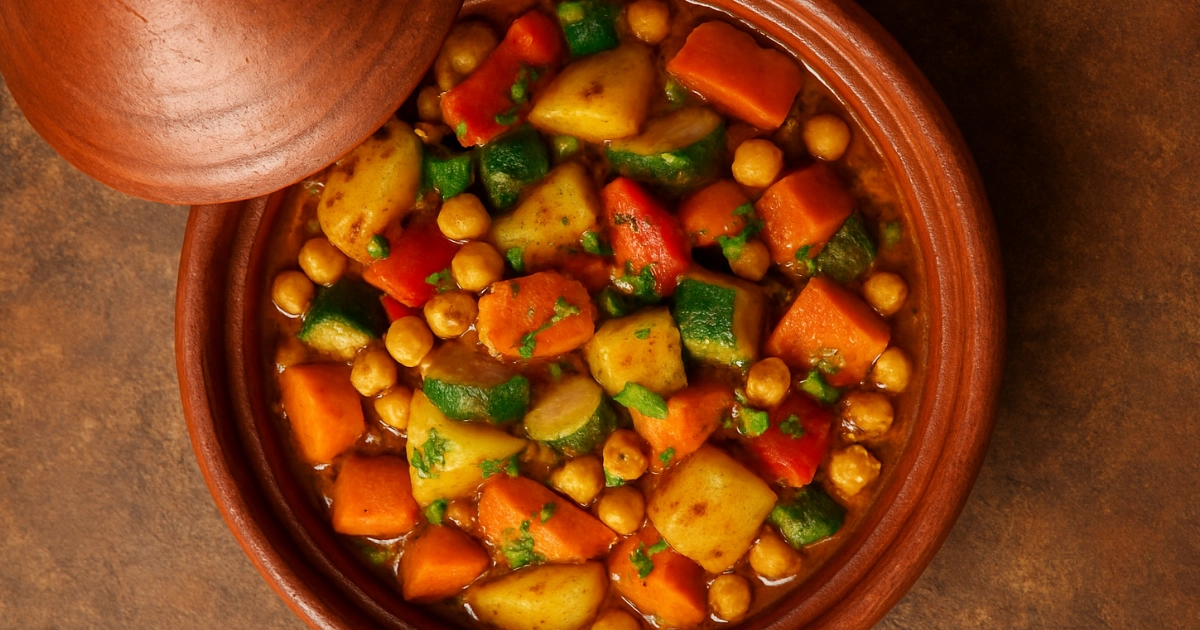
Before you dive into chopping vegetables and measuring spices, it helps to understand what makes a vegetable tagine different from any other stew you might have prepared before. The word tagine refers to both the dish itself and the conical clay pot traditionally used to cook it. In Moroccan homes, these pots sit over low, steady heat, allowing ingredients to steam gently and release their flavors gradually. The cone-shaped lid captures the aromatic vapors and sends them back down into the food, creating an environment where spices, vegetables, and broth mingle slowly until every bite tastes complete and intentional.
You, of course, don’t need an actual clay tagine pot to make a delicious vegetable tagine at home. A heavy-bottomed pot or Dutch oven works beautifully. What matters most is the gentle cooking method and the balance of spices a symphony of cumin, ginger, turmeric, paprika, and sometimes cinnamon or saffron. These spices are the heart of Moroccan cooking, bringing warmth, comfort, and a hint of the exotic to your kitchen.
Over the years, vegetable tagine has become a staple not only in Morocco but across the world, especially among home cooks who appreciate plant-based meals that are hearty and full of character. This dish is naturally vegan, incredibly nutritious, and wildly adaptable. Whether you prefer carrots over zucchini or chickpeas over potatoes, the recipe evolves with whatever you have on hand, making it one of the most flexible meals you can prepare.
Why This Easy Vegetable Tagine Recipe Works for Any Home Cook
You might think a dish with such a rich history would be complicated, but that’s exactly where this recipe surprises you. Its charm lies in its simplicity. You don’t need advanced cooking skills or rare ingredients; everything comes together in a straightforward, approachable way.
You’ll find that the spices do most of the heavy lifting, creating depth and warmth without much effort on your part. The vegetables simmer until tender, soaking up the fragrant broth, and the chickpeas add protein and heartiness that make the tagine satisfying enough to stand alone as a complete meal.
Another reason this recipe works so well for home cooks is its adaptability. You can switch vegetables based on seasons or availability. In the colder months, root vegetables like sweet potatoes and parsnips add coziness. In the summer, zucchini and tomatoes brighten the flavor. Whatever direction you choose, the result is always comforting and wholesome.
This dish also fits beautifully into many dietary lifestyles. It’s vegan, gluten-free, budget-friendly, and packed with nutrients. The combination of vegetables and spices provides antioxidants, fiber, vitamins, and plant-based protein all without requiring expensive specialty foods or hours in the kitchen.
Authentic Moroccan Chicken Tagine Recipe – Step by Step
Ingredients Needed for a Homemade Vegetable Tagine
To make your cooking experience smoother, here’s an organized view of everything you’ll need. Feel free to adjust quantities based on your preferences or serving size.
Full Ingredient List
| Ingredient | Quantity | Notes |
| Carrots | 2 large | Sliced into rounds |
| Potatoes | 2 medium | Peeled & cubed |
| Zucchini | 1 large | Cut into chunks |
| Bell pepper | 1 | Any color |
| Onion | 1 large | Thinly sliced |
| Garlic | 3 cloves | Minced |
| Chickpeas | 1 can (400g) | Drained & rinsed |
| Olive oil | 3 tbsp | Extra virgin |
| Tomato paste | 1 tbsp | Adds richness |
| Vegetable broth | 1 cup | Low sodium |
| Cumin | 1 tsp | Ground |
| Turmeric | 1 tsp | Ground |
| Paprika | 1 tsp | Optional smoked |
| Ginger | ½ tsp | Ground |
| Salt & pepper | To taste | — |
| Fresh cilantro | Handful | For garnish |
| Preserved lemon | Optional | Adds authentic brightness |
You’ll notice this ingredient list isn’t long or intimidating. It’s made of pantry staples and common vegetables, which is part of what makes this recipe such a good fit for weeknight cooking or weekend slow meals.
How to Make the Best Vegetable Tagine at Home: Step-by-Step Instructions
The beauty of preparing a vegetable tagine lies in its rhythm. You don’t rush, you don’t fuss everything unfolds in an unhurried sequence that lets each ingredient shine. Follow these steps to create a deeply flavored, tender, and aromatic dish.
Step 1: Build Flavor With a Fragrant Base
Begin by warming the olive oil in a pot over medium heat. Add sliced onions and minced garlic, letting them soften until they turn translucent and smell sweet. This stage seems simple, but it creates the foundation for the entire tagine.
Step 2: Toast the Spices
Once your onions and garlic are ready, sprinkle in your cumin, turmeric, paprika, and ginger. Stir them in and let them toast for about a minute. This step unlocks the oils inside the spices, deepening their aroma and ensuring the finished dish tastes layered rather than flat.
Step 3: Add Tomato Paste
Stir in the tomato paste and let it cook for a moment. This small detail adds richness, color, and slight acidity to balance the sweetness of the vegetables.
Step 4: Layer the Vegetables Thoughtfully
Add your vegetables in the order of how long they take to cook. Potatoes and carrots go in first, followed by zucchini, peppers, and chickpeas. This layering isn’t just technique it ensures an even texture, with nothing turning mushy or staying too firm.
Step 5: Pour in the Broth
Add your vegetable broth, adjusting the amount if needed. You don’t want the vegetables swimming in liquid; a tagine should steam more than boil. The broth should come about halfway up the ingredients.
Step 6: Slow Cooking Magic
Lower the heat, cover the pot, and let everything simmer gently for 45 minutes or until the vegetables are tender. Don’t rush this part; the slow fusion of flavors is what makes a tagine special.
Step 7: Finish With Brightness
Once the vegetables are ready, taste and adjust seasoning. Add chopped cilantro and preserved lemon slices for a final pop of freshness and citrusy depth.
Tips for the Perfect Vegetable Tagine Every Time
Every good cook develops little skills and insights along the way. These tips help you make your vegetable tagine consistently delicious:
- Toasting your spices truly matters it wakes them up and prevents dull flavor.
- Slow cooking keeps the vegetables tender and prevents them from falling apart.
- If you like sweetness, toss in a handful of raisins or dried apricots.
- If your tagine seems too watery, remove the lid during the last few minutes of cooking.
- Taste as you go; the magic of Moroccan cuisine lies in balance.
Variations You Can Try
You can make your tagine your own by experimenting with:
- Sweet potato and chickpeas
- Spicy versions with chili flakes
- Tomato-rich Mediterranean style
- Extra-vegetable versions with green beans or spinach
These variations allow you to evolve the recipe based on your cravings and the season.
What to Serve With Your Vegetable Tagine
Your vegetable tagine can stand beautifully on its own, but pairing it with the right side elevates the entire experience. You have several great options:
- Couscous: The classic pairing. It soaks up the sauce perfectly.
- Bread: A warm crusty loaf turns the sauce into a treat.
- Herbed quinoa: A healthier, protein-rich alternative.
- Moroccan salads: Think seasoned carrots or smoky eggplant zaalouk.
- Mint tea: Traditionally enjoyed with tagines for a refreshing contrast.
Storage and Reheating Guide for Vegetable Tagine
One of the best things about this dish is that it tastes even better the next day. The spices deepen, the vegetables absorb more flavor, and the whole dish mellows into something even more comforting.
Here’s how you can store it:
- Refrigerator: Keep it in an airtight container for up to 4 days.
- Freezer: You can freeze it for up to 2 months, but avoid freezing potatoes if you prefer them firm.
- Reheating: Warm it gently on the stovetop; add a splash of broth if needed.
FAQ About Vegetable Tagine
What makes a vegetable tagine recipe authentic?
Authenticity comes from the spice blend and the slow cooking method, not necessarily the cooking vessel.
Can you make a vegetable tagine without a tagine pot?
Yes, absolutely. A Dutch oven or heavy pot works perfectly for home cooking.
Which vegetables are best for a vegetable tagine recipe?
Carrots, potatoes, zucchini, peppers, and chickpeas are classic, but you can mix in seasonal vegetables too.
Can you prepare this easy vegetable tagine recipe ahead of time?
Yes, and it tastes even better when the flavors have time to meld.
How can you make your vegetable tagine more flavorful?
Toast your spices, add preserved lemon, and finish with fresh herbs.
Conclusion
Cooking a vegetable tagine at home isn’t just about preparing a meal it’s about soaking in the aromas, textures, and warmth that come from ingredients that cook slowly and generously. You discover that each layer of flavor deepens as the pot simmers, and by the time you sit down to enjoy your dish, you’ve created something deeply comforting and satisfying.
Whether you’re new to Moroccan cuisine or revisiting a favorite recipe, this vegetable tagine invites you to enjoy not just the food but the process itself. Try your own variations, tweak the spices, experiment with seasonal ingredients, and make it entirely yours.