Carrot Cake Overnight Oats Easy Healthy Breakfast Recipe
Craving a breakfast that tastes like dessert but fuels your morning? Carrot cake overnight oats give you the warm spices, grated carrot texture, and a creamy finish without baking or a sugar overload. You can prep a satisfying, nutrient-rich jar in minutes that keeps well for busy mornings and doubles as a meal-prep winner.
You’ll find this post explains what makes carrot cake overnight oats different from regular overnight oats, which ingredients boost flavor and nutrition, and simple steps to customize them to your taste or dietary needs. Keep reading to learn easy prep, smart storage tips, favorite mix-ins, and quick fixes for common mistakes so your next jar comes out perfect every time.
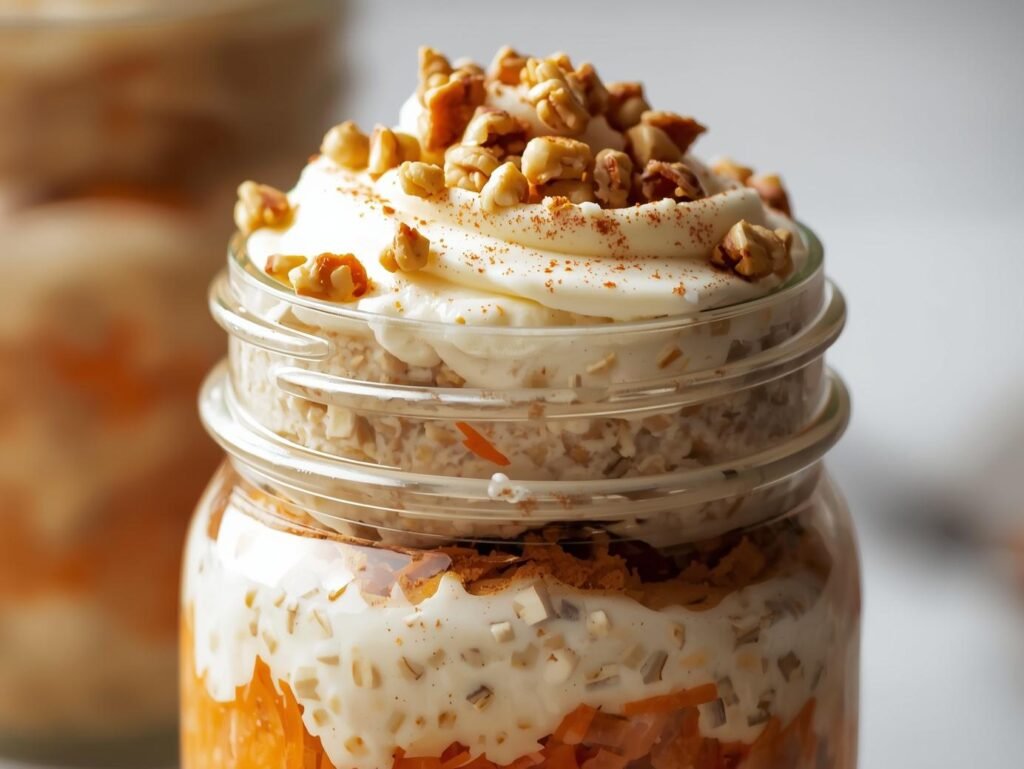
What Are Carrot Cake Overnight Oats?
This is a refrigerated, ready-to-eat breakfast that blends rolled oats with shredded carrots, warm spices, a sweetener, and a creamy liquid to mimic carrot cake flavors without baking. You get texture from oats and carrots, creaminess from yogurt or milk, and optional add-ins like nuts or raisins for crunch and chew.
Origins of Overnight Oats
Overnight oats grew from simple pantry-staple meal prep: whole rolled oats soaked in liquid until tender, often with chia or yogurt added to thicken. The technique became widely popular in the 2010s because it saves cooking time and stores well in jars for grab-and-go mornings.
You prepare them by combining oats and a liquid (milk, plant milk, or yogurt) and chilling them 4–8 hours. Chia seeds are commonly used to improve texture and increase fiber and omega-3 content.
Nutritionally, overnight oats preserve whole-grain benefits: complex carbohydrates, fiber, and sustained energy. You can scale portions easily and pre-portion jars for several days, which helps with consistent meal planning.
Carrot Cake Inspiration
Carrot cake overnight oats copy the classic dessert’s flavor profile: grated carrots, cinnamon, nutmeg or allspice, a sweetener like maple or honey, and often vanilla. You can add pineapple, raisins, or shredded coconut to echo common carrot cake mix-ins.
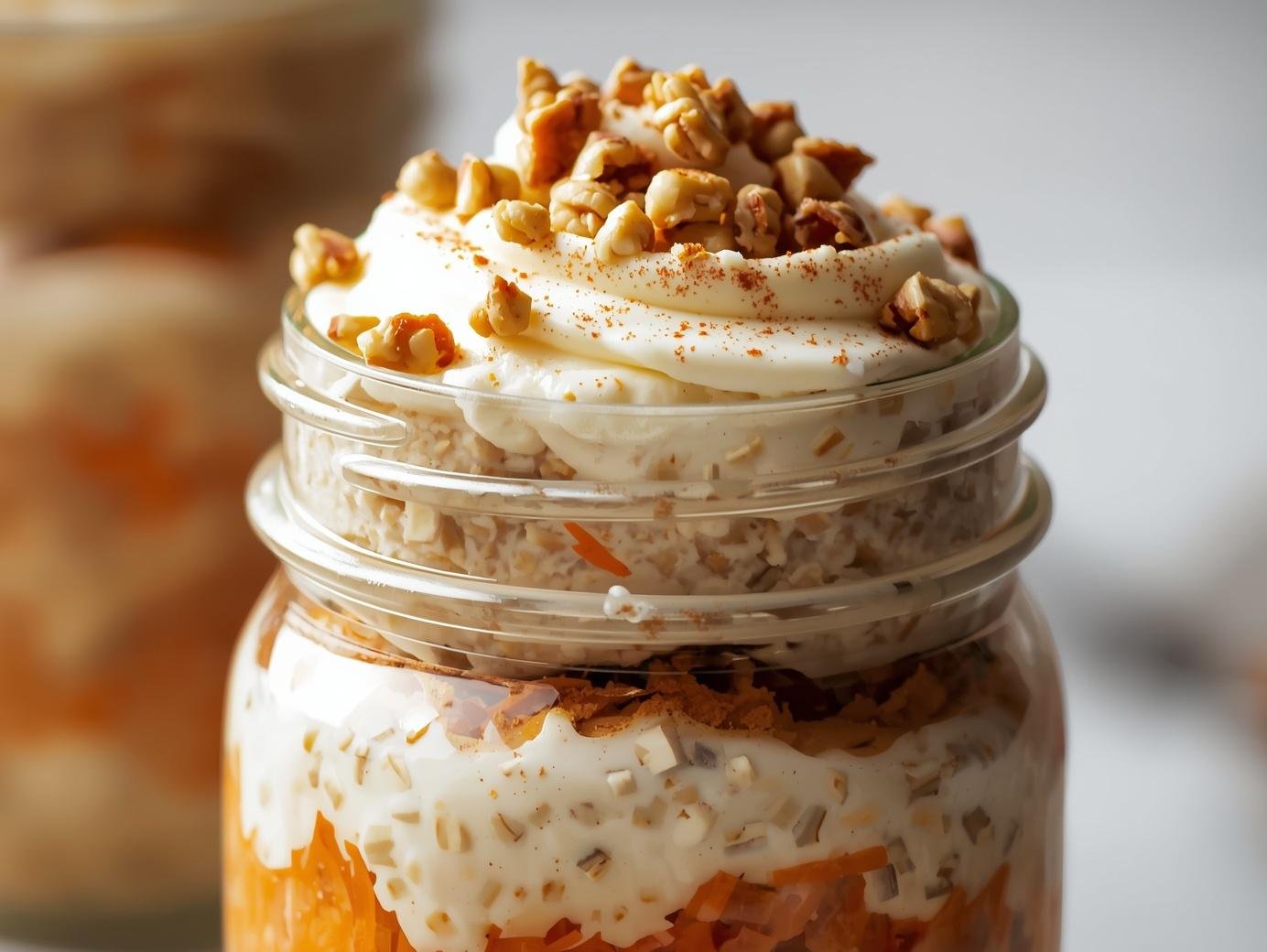
A frosting-like element appears as a layer of Greek yogurt sweetened with a touch of cream cheese or maple syrup, giving the familiar tang and creaminess of cream cheese frosting. Chopped pecans or walnuts provide the crunchy contrast you expect from carrot cake.
This version keeps the taste recognizable while reducing added sugars and skipping the oven. You control sweetness, spice intensity, and fat by choosing your dairy, sweetener, and nut amount.
Why Combine Carrot Cake with Oats?
Combining carrot cake flavors with soaked oats creates a breakfast that tastes indulgent but can be more nutrient-dense than a slice of cake. You get whole-grain oats for fiber and steady energy, plus carrots for beta-carotene and extra moisture.
The flavors pair well: oats provide a neutral, slightly nutty base that carries cinnamon and nutmeg, while grated carrots add texture and natural sweetness. Protein-rich yogurt or milk rounds out the macronutrients so the meal keeps you full longer.
You can adapt the recipe to dietary needs use dairy-free milk and yogurt, gluten-free oats, or sugar substitutes. That flexibility makes it easy to enjoy a familiar dessert flavor in a practical, healthier breakfast format.
Health Benefits of Carrot Cake Overnight Oats
This breakfast combines grated carrots, rolled oats, and natural sweeteners to boost fiber, vitamins, and sustained energy. You get antioxidants, heart-healthy carbs, and a way to reduce refined sugar without sacrificing flavor.
Nutritional Value of Carrots
Carrots add beta‑carotene, which your body converts to vitamin A to support vision and immune function. A half-cup of grated carrot supplies roughly 100% of the daily vitamin A recommendation for many adults when measured as retinol activity equivalents, plus small amounts of vitamin K and potassium.
You also gain antioxidants like lutein and zeaxanthin that help protect eye tissues. The carrots contribute water and fiber too about 1–2 grams per half-cup which aids digestion and helps you feel fuller longer.
Whole Grain Oats Advantages
Rolled oats provide complex carbohydrates and soluble fiber, especially beta‑glucan, which helps lower LDL cholesterol when consumed regularly. A typical 1/2-cup dry serving delivers about 4 grams of fiber and 5–7 grams of protein, contributing to steady blood sugar and appetite control.
Oats supply iron, magnesium, and B vitamins that support energy metabolism. Their texture in overnight oats also keeps the meal satisfying without added saturated fat, making it practical for heart-healthy and weight‑management goals.
Natural Sweeteners Used
Recipes often use maple syrup, honey, or mashed banana to add sweetness while avoiding refined sugar. Maple syrup and honey bring trace minerals and antioxidants; a tablespoon of maple syrup provides small amounts of manganese and zinc.
Mashed banana adds potassium and extra fiber plus natural sugars that blend well with spices like cinnamon. Using these options allows you to control sweetness level and overall added sugar, keeping a single serving closer to recommended daily limits.
Key Ingredients for Carrot Cake Overnight Oats
You’ll need a sturdy oat base, finely grated carrots, warm spices, and a creamy liquid to soak everything. Add-ins and toppings let you tune texture, sweetness, and crunch.
Essential Base Ingredients
- Rolled oats: Use old-fashioned rolled oats for the best overnight texture. They soften overnight without turning mushy the way quick oats can.
- Shredded carrots: Finely grate or pulse carrots so they meld into the oats. About 1/3 to 1/2 cup per serving gives carrot flavor and moisture without making the mix watery.
- Liquid: Choose milk, almond milk, or a thicker yogurt-milk mix. Use roughly equal parts oats to liquid by volume (1:1) for a spoonable consistency; increase liquid slightly if you prefer looser oats.
- Binder and sweetener: Greek yogurt or mashed banana adds creaminess and protein. Sweeten lightly with maple syrup or honey 1 tablespoon per serving is a good starting point.
- Spices and salt: Cinnamon is essential; add 1/2 teaspoon per serving. A pinch of nutmeg and ground ginger enhances the carrot-cake profile. A small pinch of salt brightens flavors.
Recommended Add-Ins
- Chia or flax seeds: 1 tablespoon boosts texture, thickens overnight, and adds omega-3s and fiber.
- Protein options: Scoop protein powder or use more Greek yogurt to make the oats more filling. Adjust the liquid when adding protein powder to avoid stiffness.
- Fruits: Mix-in raisins or crushed pineapple for classic carrot-cake notes. Use 1–2 tablespoons to avoid overwhelming moisture balance.
- Nuts: Chopped pecans or walnuts stirred in before chilling add richness and crunch. Toast them briefly to deepen flavor.
- Extracts: A drop of vanilla or a few drops of almond extract can lift the flavors. Start with 1/4 teaspoon and adjust to taste.
Best Toppings
- Cream cheese drizzle: Whisk softened cream cheese with a splash of milk and a little sweetener for a faux cream-cheese topping. Pipe or drizzle just before serving.
- Crunch and texture: Sprinkle chopped pecans, toasted coconut flakes, or granola right before eating to preserve crunch.
- Fresh fruit: Add diced apple or pineapple on top to brighten the bowl and add juiciness.
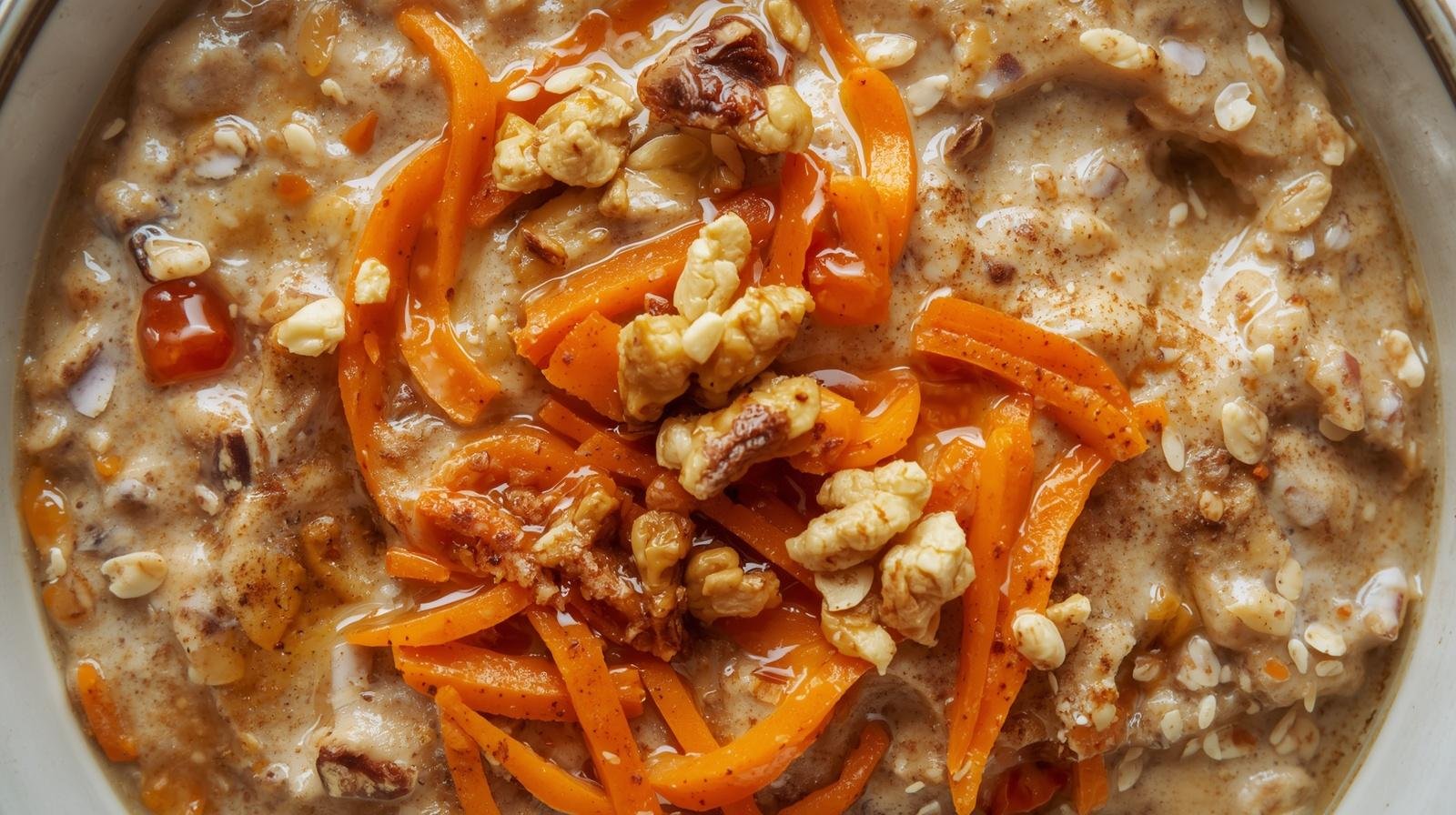
- Finishing touches: Grate a little extra carrot or dust with cinnamon for presentation. A few dark raisins or a drizzle of maple syrup finish the bowl without overpowering it.
Step-by-Step Preparation Guide
You’ll assemble shredded carrots, rolled oats, milk (or plant milk), Greek yogurt or dairy-free yogurt, chia seeds, warm spices, and a touch of sweetener. Mix measured ingredients in a jar or airtight container, chill 6–8 hours, then top before eating.
Prep Tips and Tricks
Measure ingredients with the same cups or a kitchen scale for consistent texture; use 1/2 cup rolled oats per serving and about 1/2 to 3/4 cup liquid depending on how thick you like it. Grate carrots finely (microplane or fine box grater) so they soften overnight and distribute sweetness evenly.
Use plain Greek yogurt or coconut yogurt for creaminess and about 2 tablespoons of chia seeds to thicken and add fiber. Add spices (1/2 teaspoon cinnamon, 1/4 teaspoon nutmeg) and a small sweetener (1–2 teaspoons maple syrup or honey) to taste. Stir briefly to hydrate dry ingredients, then press down to remove large air pockets so oats absorb liquid uniformly.
If you want add-ins like raisins, chopped walnuts, or shredded coconut, fold half in before refrigerating and reserve the rest for topping. For higher protein, swap 2 tablespoons of oats for 1 scoop of unflavored protein powder and increase liquid slightly.
Proper Storage Methods
Store finished overnight oats in the refrigerator at or below 40°F (4°C). Use airtight lids to prevent fridge odors and moisture loss; properly sealed jars keep texture stable for 2–3 days, though flavor peaks within 24 hours.
If you make multiple servings, label containers with the prep date so you eat the oldest batch first. Do not freeze overnight oats made with yogurt or dairy; freezing changes texture and can make the mixture grainy. If you must freeze, omit yogurt and use a higher liquid ratio, then thaw in the fridge and stir thoroughly before serving.
When reheating, warm gently in a microwave-safe container for 15–30 seconds and stir, or enjoy cold. Discard if you detect sour smell, visible mold, or separation that doesn’t recombine after stirring.
Easy Cranberry and Orange Dessert: Your Ultimate Sweet and Tangy Treat
Recommended Containers
Choose wide-mouth mason jars (8–16 oz) for single servings; the wide opening makes stirring and topping easy. Look for glass jars with tight-sealing lids to avoid flavor transfer and plastic absorption.
For meal prep, use BPA-free plastic containers with snap lids or stainless-steel containers if you prefer nonbreakable options. Avoid very large, shallow containers that allow too much air exposure; they speed moisture loss and uneven hydration.
If you prepare jars to-go, secure lids and place in an insulated bag with a small ice pack for travel over 2 hours. Label each container with date and contents using a removable sticker or masking tape so you can rotate batches easily.
Customization Ideas for Every Taste
You can change textures, sweetness, and nutrition by swapping milk, mix-ins, and toppings. Pick specific plant milks, protein boosts, or kid-friendly add-ins to match dietary needs and flavor preferences.
Vegan and Dairy-Free Options
Use full-fat coconut milk or unsweetened soy milk for creaminess that mimics dairy. Coconut adds richness and a slight tropical note; soy gives a neutral, protein-friendly base.
Swap Greek yogurt for unsweetened soy or coconut yogurt when you want tang and body. Choose thick, refrigerated plant yogurts to avoid a watery final texture.
For sweeteners, use maple syrup, agave, or mashed banana instead of honey. Add 1–2 tablespoons of chia seeds to help thicken and create a pudding-like consistency without dairy.
Top with chopped pecans, shredded coconut, or a smear of dairy-free cream cheese to recreate classic carrot cake mouthfeel.
Protein-Packed Variations
Add 1 scoop (20–30 g) of vanilla or unflavored protein powder to a 12-oz jar to raise protein to ~20–30 g per serving. Mix powder with a little milk first to prevent clumping, then stir into the oats.
Stir in 1/2 cup Greek yogurt (or plant-based high-protein yogurt) for extra creaminess and 10–12 g more protein.
Include nut butter (1–2 tablespoons almond or peanut) for healthy fats and 6–8 g additional protein. For a higher-protein vegan option, add 1–2 tablespoons hemp seeds and 2 tablespoons chopped walnuts.
If you track macros, note that seeds and nut butters add calories; adjust milk volume to preserve texture.
Kid-Friendly Flavors
Keep flavors familiar: mix in 1–2 tablespoons applesauce or mashed banana for sweetness kids recognize. Grate carrots finely so the texture blends into the oats and won’t feel chunky.
Add small, colorful mix-ins like mini chocolate chips (1 tablespoon), raisins, or a sprinkle of cinnamon to encourage acceptance.
Make jars visually appealing by layering oats, carrot, and a dollop of cream cheese or yogurt in the middle. Portion into 4–6 oz jars for small hands and grab-and-go breakfasts.
If picky eaters resist spices, start with just cinnamon, then gradually introduce nutmeg or ginger in later batches.
Serving Suggestions
These ideas make your carrot cake overnight oats look inviting and taste complete. Focus on texture contrasts, bright colors, and beverage pairings that match the warm spices.
Garnishing for Visual Appeal
Top each jar with a small mound of toasted pecans or walnuts for crunch and a glossy finish. Scatter plump raisins or chopped dates for sweet pockets and contrast against the oats’ creaminess.
Add a spoonful of Greek yogurt or a swirl of dairy-free yogurt for a creamy white accent that lifts flavors. Finish with a light dusting of cinnamon and a few shreds of unsweetened coconut to echo carrot cake spices and add visual interest.
If you want color, press a few thin carrot ribbons or a tiny sprig of mint onto the surface. For serving to guests, arrange toppings in neat rows nuts, raisins, coconut so each spoonful gives a different texture.
Pairing with Beverages
Choose a hot beverage with warm spice notes to complement the oats: chai tea, cinnamon-spiced coffee, or a mug of ginger tea work well. The spices in those drinks will echo the cinnamon, nutmeg, and ginger already in the oats.
If you prefer cold drinks, pick a lightly sweetened cold brew or an unsweetened almond milk latte to keep the meal balanced. For a protein boost, mix a small protein shake (vanilla or plain) on the side rather than stirring it into the oats.
When serving brunch, offer sparkling water with a lemon wedge to cleanse the palate between bites. Match sweeter toppings like maple or honey with a milder beverage to avoid overpowering the oats’ natural flavors.
Meal Prep and Storage Tips
Make several jars at once to save morning time. Overnight oats hold up well in the fridge, so batch-prepare 3–4 servings for the week.
Use airtight jars or containers to keep the oats fresh. Mason jars with lids work great and stack easily in your fridge.
Label jars with the date so you know when you made them. Consume within 3–4 days for best texture and flavor.
Keep crunchy toppings separate until serving to preserve texture. Store nuts, granola, or toasted coconut in small containers or zipper bags.
If you cook your oats or add dairy-free yogurt, cool them before sealing. Warm ingredients can raise fridge temperature and shorten shelf life.
Adjust thickness after chilling by stirring in a splash of milk. Oats often thicken overnight; a little extra liquid brings them back to the texture you like.
Freeze portions if you want longer storage; thaw overnight in the fridge and give a good stir before eating. Note that texture may change slightly after freezing.
Quick reference
- Storage: airtight container, refrigerated
- Shelf life: 3–4 days refrigerated
- Separate: crunchy toppings
- Tip: label with date and add liquid before eating
Rotate flavors by changing spices, mix-ins, or protein boosters. This keeps your breakfasts interesting and reduces waste.
Common Mistakes to Avoid
Not measuring ingredients can throw off texture and taste. Use proper measuring cups and spoons for oats, milk, and sweeteners so your oats aren’t too runny or too thick.
Skipping thorough mixing leaves pockets of dry oats or uneven spices. Stir well so shredded carrot, spices, and any add-ins distribute evenly before chilling.
Using the wrong liquid-to-oats ratio results in either mush or dryness. Aim for about 1:1 to 1.25:1 liquid to oats for rolled oats; adjust slightly if you use quick oats or steel-cut oats.
Adding fragile toppings before refrigerating makes them soggy. Save crunchy elements like nuts, granola, or toasted coconut for the morning and add them just before eating.
Overloading with sweeteners or fat can mask the carrot-cake flavors. Stick to a modest amount of maple syrup or honey and let spices and carrot shine.
Not giving the oats enough time to set reduces creaminess. Refrigerate at least 4–6 hours or overnight for the best texture and flavor melding.
Forgetting dietary swaps can cause disappointment. If you need dairy-free or gluten-free, choose appropriate milk and certified gluten-free oats so the recipe meets your needs.
Common mistakes at a glance:
- Measure accurately
- Mix thoroughly
- Use correct liquid ratio
- Add crunchy toppings later
- Moderate sweeteners and fats
- Chill enough time
- Make appropriate dietary substitutions
Seasonal and Holiday Adaptations
You can easily tailor carrot cake overnight oats to match seasons and holidays. Small swaps change flavor and appearance without extra effort.
In spring, brighten the oats with toasted coconut, chopped pistachios, and a dollop of citrus yogurt. Those additions add freshness and a light crunch that pairs well with the warm spices.
For summer, add frozen or fresh berries and a splash of vanilla almond milk for a cooler, fruit-forward version. You can also stir in a little lemon zest to lift the sweetness.
In autumn, emphasize spice: increase cinnamon, add ground ginger and nutmeg, and fold in chopped pecans. Top with a smear of maple-flavored yogurt for a seasonal finish.
For winter holidays, make the oats richer by using full-fat yogurt and stirring in orange peel, cloves, and a handful of candied ginger. Garnish with toasted walnuts and a few raisins for a classic holiday profile.
Use this quick reference to mix and match flavors:
- Base swaps: almond milk, oat milk, Greek yogurt
- Mix-ins: raisins, shredded coconut, pecans, walnuts, candied ginger
- Toppings: cream cheese swirl, maple yogurt, citrus zest, fresh fruit
You can prepare jars ahead for gatherings or pack them as thoughtful edible gifts. Simple labeling with flavors and allergens keeps them guest-friendly and festive.
Table of Contents