Keto Bread Recipes : How to Make Easy Low-Carb Bread Using Almond and Coconut Flour That Actually Tastes Amazing
The Bread You Thought You Had to Give Up Forever
There is a particular kind of grief that comes with starting a ketogenic diet, and it has nothing to do with missing pasta or swearing off sugar — it is the quiet, deeply personal moment when you realize that bread, the most fundamental of all comfort foods, the thing you have eaten in some form every single day of your life, is suddenly off the table. You remember the smell of toast in the morning, the satisfying resistance of a good sandwich, the way a warm slice of homemade bread makes an ordinary Tuesday feel like something worth showing up for. And then someone tells you: you can still have it. You just have to make it differently.
That is exactly what this guide is for. Whether you are brand new to the ketogenic lifestyle or you have been living low-carb for years and still haven’t found a keto bread recipe that doesn’t taste like a damp sponge, what follows is a thorough, honest, and genuinely useful walkthrough of how to bake satisfying, sliceable, low-carb bread using almond flour and coconut flour — two of the most powerful and versatile ingredients in the keto kitchen. By the time you finish reading, you will understand not just the how but the why behind every ingredient, every ratio, and every technique, which means you will be equipped to troubleshoot, adapt, and eventually perfect your own version of this recipe.
Why Traditional Bread Is the Enemy of a Ketogenic Diet
To truly appreciate what makes keto bread recipes work, it helps to understand why conventional bread is so deeply incompatible with a low-carb lifestyle in the first place. Traditional wheat-based bread is built almost entirely around two things: gluten and starch. The gluten, which is the protein network that forms when water is added to wheat flour and the dough is worked, gives bread its elastic, chewy structure and allows it to trap the carbon dioxide released by yeast or baking powder, creating that light, airy crumb you recognize from a good loaf. The starch, meanwhile, is the primary carbohydrate in wheat, and it is responsible for the dramatic blood sugar spikes that knock you out of ketosis almost immediately after eating.
A single slice of ordinary white sandwich bread contains somewhere between 13 and 20 grams of net carbohydrates, and when you consider that most people following a strict ketogenic diet are trying to stay under 20 to 25 grams of net carbs for the entire day, eating two slices of toast for breakfast essentially exhausts your entire carbohydrate budget before you have finished your morning coffee. This is not a minor inconvenience — it is a fundamental incompatibility, which is why finding a viable keto bread recipe that genuinely replicates the experience of real bread is one of the most sought-after goals in low-carb cooking.
The Role of Net Carbs in Keto Bread
When evaluating any keto bread recipe, the number that matters most is not total carbohydrates but net carbohydrates, which is calculated by subtracting dietary fiber and sugar alcohols from the total carb count. This distinction matters enormously in the world of low-carb baking because many of the alternative flours and binding agents used in keto recipes are high in fiber, which means their total carb count looks alarming at first glance but their net carb impact is actually quite modest. A good almond flour keto bread, for example, might contain 6 to 8 grams of total carbohydrates per slice but only 1 to 2 grams of net carbs once you account for the fiber — a figure that is genuinely compatible with strict ketogenic macros and makes enjoying a sandwich or a piece of toast a realistic, daily pleasure rather than a rare indulgence.
Understanding Your Key Ingredients — Almond Flour vs. Coconut Flour
Before you mix a single bowl or preheat your oven, you need to develop a clear understanding of the two starring ingredients in low-carb keto bread recipes, because almond flour and coconut flour behave so differently from each other — and so differently from wheat flour — that treating them as interchangeable substitutes is one of the most common and costly mistakes beginners make.
Almond Flour — The Workhorse of Keto Baking
Almond flour is made by blanching whole almonds to remove their skins, then grinding them into a fine, pale powder with a subtly sweet, nutty flavor. It is by far the most commonly used flour in keto bread recipes, and for good reason: its fat content is high enough to create a moist, tender crumb, its protein content helps provide structure, and its mild flavor means it does not overwhelm the other ingredients in the way that, say, a strongly flavored nut flour might. From a nutritional standpoint, almond flour is an excellent low-carb option, containing roughly 6 grams of total carbs per quarter-cup serving with about 3 grams of fiber, leaving a net carb count of just 3 grams for a relatively generous portion.
One important distinction you will encounter when shopping is the difference between almond flour and almond meal. Almond flour is made from blanched, skinless almonds ground to a very fine consistency, while almond meal is typically made from whole almonds with their skins intact and ground to a coarser texture. For keto bread recipes where you want a fine, light crumb, superfine blanched almond flour is almost always the better choice, as the coarser texture of almond meal can result in a denser, grittier loaf that never quite achieves the soft, sliceable quality you are aiming for.
The primary challenge of baking with almond flour is that it contains no gluten whatsoever, which means it has no natural binding capacity and no ability to trap gas and rise the way wheat flour does. This is why most almond flour keto bread recipes rely on eggs — often a surprisingly large number of them — along with additional binders like psyllium husk powder or xanthan gum to provide the structure and chewiness that gluten would otherwise deliver.
Coconut Flour — The Absorbent, Fiber-Rich Alternative
Coconut flour is derived from the dried, defatted meat of coconuts, ground into a fine white powder with a mild, slightly sweet tropical flavor. Compared to almond flour, it is dramatically higher in fiber — roughly 5 grams of fiber per two tablespoons — and dramatically lower in fat, which gives it a completely different performance profile in baking. The most important thing you need to understand about coconut flour before you ever open the bag is this: it is extraordinarily, almost aggressively, absorbent. Coconut flour can absorb four to six times its weight in liquid, which means that substituting it for almond flour on a one-to-one basis in any recipe will result in a dry, dense, crumbly disaster that bears no resemblance to bread.
The general rule of thumb that experienced keto bakers follow is that you need roughly one-quarter to one-third the amount of coconut flour compared to almond flour in any given recipe, and you need to increase the number of eggs and liquid ingredients significantly to compensate for coconut flour’s absorbency. Used correctly, however, coconut flour produces a bread with a slightly lighter, more delicate texture than pure almond flour bread, and its higher fiber content means an even lower net carb count per serving, which makes it a valuable ingredient in your keto baking toolkit even if it requires more careful handling.
The Power of Combining Both Flours
Many of the best keto bread recipes — including the one detailed in this article — use a combination of both almond flour and coconut flour rather than relying on one alone, and this blending approach is not arbitrary. The high fat content and density of almond flour pairs beautifully with the lightness and fiber content of coconut flour, and the two together produce a bread with a more balanced texture, a better rise, and a more neutral flavor than either flour achieves on its own. Think of it as the keto baker’s version of a flour blend, where each component compensates for the other’s weaknesses to produce something greater than either could accomplish individually.
Essential Supporting Ingredients for Perfect Keto Bread
Beyond the flours themselves, a well-constructed keto bread recipe depends on a supporting cast of ingredients that each perform a specific and important function, and understanding what each one does will help you make informed substitutions and troubleshoot problems when they arise.
Eggs — The Structural Foundation
In conventional baking, eggs play a supporting role, adding richness and helping to bind ingredients together. In keto bread baking, however, eggs are the central structural element, responsible for everything from binding and leavening to moisture and color. Most almond and coconut flour bread recipes call for anywhere from three to six eggs per loaf, and each of those eggs is doing serious work. The proteins in egg whites coagulate when heated, creating the structural scaffolding that holds the bread together and gives it its sliceable quality, while the fat-rich yolks add the moisture and richness that prevents the bread from drying out during baking. Attempting to make keto bread with fewer eggs than the recipe calls for is one of the surest ways to end up with a loaf that collapses, crumbles, or simply refuses to hold together when sliced.
Psyllium Husk Powder — The Gluten Substitute
Psyllium husk powder is perhaps the single most important secondary ingredient in a great keto bread recipe, and it is one that many beginners skip because they are unfamiliar with it or because they assume it can be left out without consequence. It cannot. Psyllium husk is a form of soluble fiber derived from the husks of Plantago ovata seeds, and when it comes into contact with liquid, it forms a thick, viscous gel that mimics many of the binding and texture-creating properties of gluten. In practical terms, adding psyllium husk to your keto bread batter gives the finished loaf a chewier, more bread-like texture, helps it hold together when sliced, and contributes to a slight springiness that distinguishes a genuinely good keto bread from a dense, crumbly imitation. Use whole psyllium husks rather than psyllium husk powder if possible, as the powder form can sometimes turn baked goods a disconcerting shade of purple.
Baking Powder and Apple Cider Vinegar
Since keto bread recipes do not use yeast — which would require sugars to activate and would dramatically extend the preparation time — they rely instead on chemical leavening, typically a combination of baking powder and, in many recipes, a small amount of apple cider vinegar. The acid in the vinegar reacts with the baking powder to produce carbon dioxide bubbles, which expand during baking and give the bread a lighter, more open crumb. The flavor of the vinegar itself bakes off almost entirely in the oven, leaving behind no detectable taste, but its leavening contribution is meaningful and worth including even if it seems like an unusual addition.
Best Double Chocolate Muffins Recipe – Moist, Rich, and Bakery-Style at Home
The Complete Keto Bread Recipe — Step by Step
Now that you understand the why behind every ingredient, it is time to walk through the actual process of making this low-carb keto bread from start to finish. The recipe below is designed to be approachable for beginners while delivering results that will genuinely impress anyone who tries them.
Ingredients Table
| Ingredient | Amount | Net Carbs (Approx.) | Purpose |
|---|---|---|---|
| Blanched Almond Flour (superfine) | 1½ cups (150g) | ~4.5g total | Base structure, moisture, fat |
| Coconut Flour | ¼ cup (30g) | ~3g total | Lightness, fiber, structure |
| Psyllium Husk Powder | 2 tbsp (15g) | ~0g (all fiber) | Binding, chewiness, texture |
| Baking Powder | 1½ tsp | 0g | Leavening |
| Fine Sea Salt | ½ tsp | 0g | Flavor enhancement |
| Large Eggs | 4 whole | 0g | Structure, binding, moisture |
| Melted Butter or Coconut Oil | 3 tbsp (45ml) | 0g | Moisture, richness, flavor |
| Apple Cider Vinegar | 1 tsp | 0g | Leavening activation |
| Warm Water | ⅓ cup (80ml) | 0g | Hydration |
Estimated net carbs per slice (12 slices per loaf): approximately 1.5–2g
Equipment You Will Need
Before you begin, gather a standard 9×5 inch loaf pan, which you will want to line with parchment paper leaving an overhang on both long sides so you can lift the finished loaf out cleanly. You will also need two mixing bowls — one for your dry ingredients and one for your wet ingredients — a whisk, a rubber spatula or wooden spoon, and an oven thermometer if you have one, since oven temperature accuracy matters more in keto baking than in conventional baking due to the sensitivity of egg-based structures to heat.
Step-by-Step Instructions
The process begins with preheating your oven to 350°F (175°C), which should happen before you do anything else so the oven has time to reach a true, stable temperature by the time your batter is ready. While the oven heats, combine all of your dry ingredients — the almond flour, coconut flour, psyllium husk powder, baking powder, and salt — in a large mixing bowl and whisk them together thoroughly, making sure there are no lumps in the almond flour and that the psyllium husk and baking powder are evenly distributed throughout. This step matters more than it might seem, because uneven distribution of baking powder or psyllium husk can create pockets of dense, gummy, or overly risen bread in the finished loaf.
In a separate bowl, whisk together your four eggs until the yolks and whites are fully combined and the mixture is slightly frothy, then add the melted butter or coconut oil — whichever you are using — along with the apple cider vinegar and the warm water, whisking everything together until it forms a homogeneous liquid mixture. The water should be warm but not hot; water that is too hot risks beginning to cook the eggs before they reach the oven, which can affect the final texture.
Pour the wet ingredients into the bowl of dry ingredients and stir immediately and vigorously, because the psyllium husk will begin absorbing liquid the moment the two mixtures come into contact, and you want to make sure everything is fully incorporated before the batter starts to thicken and firm up. Within about thirty seconds of mixing, you will notice the batter changing consistency quite dramatically, going from a loose, pourable mixture to something that resembles thick mashed potatoes or a soft, tacky dough — this is exactly what you want, and it is a sign that the psyllium husk is doing its job. Transfer this mixture to your prepared loaf pan, smoothing the top with a wet spatula or the back of a damp spoon to create an even, slightly domed surface, and immediately place it in the center of your preheated oven.
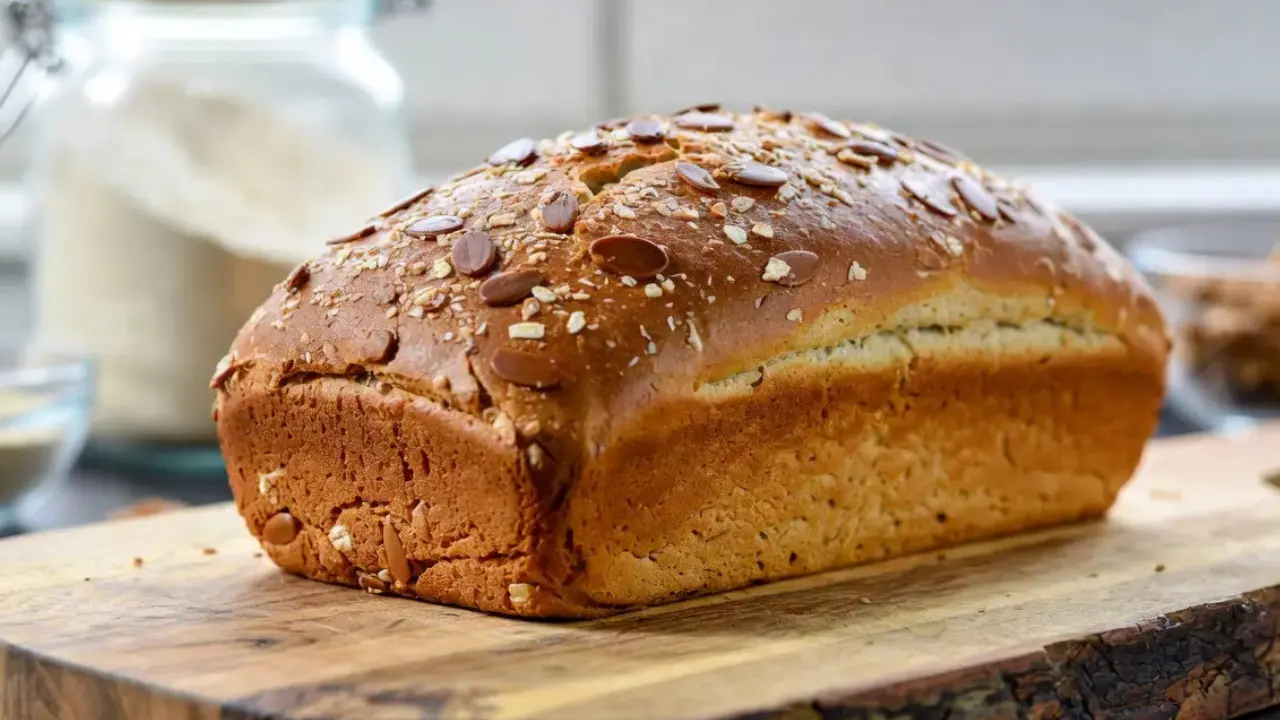
Bake the loaf for 45 to 55 minutes, checking at the 45-minute mark by inserting a wooden skewer or toothpick into the center of the loaf — it should come out clean or with just one or two moist crumbs attached. The finished bread should be deeply golden brown on the outside and should sound hollow when you tap the bottom. One of the most important steps, and one that many impatient bakers skip, is allowing the loaf to cool completely on a wire rack before slicing it — this means at least one hour, and ideally two. Keto bread made with psyllium husk continues to set and firm up as it cools, and slicing it while still warm will result in a gummy, structurally compromised interior that bears no resemblance to the finished product you will get if you simply exercise a little patience.
Flavor Variations and Creative Add-Ins
Once you have mastered the basic keto bread recipe and understand how the components work together, a world of creative variations opens up to you, and experimenting with them is one of the most enjoyable parts of low-carb baking. For a savory herb bread that pairs beautifully with soups and stews, add a teaspoon each of dried rosemary and thyme along with a tablespoon of everything bagel seasoning to the dry ingredients before mixing. For a richer, slightly nuttier loaf that toasts exceptionally well, replace the plain melted butter with browned butter — butter that has been cooked gently in a saucepan until the milk solids turn golden and develop a toasted, almost nutty aroma — which adds a depth of flavor that ordinary butter simply cannot match.
If you enjoy a slightly denser, more substantial loaf that is particularly good for sandwiches, stir in two tablespoons of sunflower seeds and one tablespoon of sesame seeds into the batter before baking, which adds texture, nutrition, and a visual interest that makes the finished loaf look genuinely artisanal. For a mildly sweet version that works well with cream cheese or nut butter, add a teaspoon of vanilla extract and a tablespoon of your preferred granulated keto sweetener — erythritol or monk fruit work equally well here — along with a pinch of cinnamon to the dry ingredients.
Storage Tips to Keep Your Keto Bread Fresh
Knowing how to store your keto bread properly is just as important as knowing how to bake it, because the absence of preservatives and the high moisture content of an egg-rich batter means it will not last as long as a commercial loaf left on the counter. At room temperature in an airtight container, your keto bread will stay fresh and flavorful for about two to three days, though in a warm kitchen you may notice it beginning to feel slightly damp on the surface after day two, which is a sign that moisture is migrating to the exterior. Refrigerating the bread extends its life to about a week, though cold storage does cause keto bread to firm up slightly, which is why toasting it before eating becomes particularly worthwhile once it has been chilled.
For longer-term storage, keto bread freezes remarkably well, and pre-slicing the loaf before freezing is one of the most practical things you can do to make your keto lifestyle easier on a daily basis. Wrap each slice individually in plastic wrap, then store the wrapped slices together in a zip-lock freezer bag, and you will have single-serving portions of keto bread that can be taken directly from the freezer and toasted without any thawing required, giving you the convenience of always having bread available without the waste of a loaf going stale before you finish it.
Troubleshooting Common Keto Bread Problems
Even with a solid understanding of the ingredients and a careful approach to the method, keto bread baking can throw up a few frustrating surprises, particularly the first time you attempt it, and knowing how to diagnose and fix the most common problems will save you both ingredients and disappointment.
Why Is My Bread Too Dense?
A loaf that comes out dense and heavy rather than light and sliceable is usually the result of one of three things: too much coconut flour relative to almond flour, insufficient eggs, or batter that was not mixed thoroughly enough to fully activate the baking powder. Check your measurements carefully — coconut flour in particular is easy to overpack into a measuring cup if you are not spooning and leveling — and make sure your eggs are at room temperature before you add them to the batter, since cold eggs can cause the melted butter to resolidify into small lumps that disrupt the batter’s structure.
Why Did My Bread Sink in the Middle?
A sunken center is one of the most disheartening things that can happen to a baked loaf, and in keto bread it is almost always caused by underbaking. Because almond and coconut flour breads do not change color dramatically as they approach doneness the way wheat-based breads do, it is easy to mistake a golden crust for a sign that the loaf is cooked through when the interior is still wet and structurally fragile. Always rely on a skewer test rather than color alone, and if in doubt, give the loaf an additional five to ten minutes in the oven — the high fat content of almond flour means it is quite forgiving about overbaking and will not dry out as quickly as a wheat-based loaf would under the same conditions.
Why Does My Bread Have a Gummy Texture?
Gumminess is almost always a psyllium husk issue, and it can be caused either by using too much psyllium or by slicing the bread before it has fully cooled and set. If you have been patient about cooling and the texture is still unpleasantly gummy, try reducing the psyllium husk by half a tablespoon in your next batch, or switch to whole psyllium husks rather than the powder form, which some bakers find produces a less gummy result. A brief second toasting in a dry pan or toaster oven can also dramatically improve the texture of a slice that is slightly gummier than ideal, transforming it from something you are reluctantly eating into something you are actually enjoying.
Nutritional Overview of Almond and Coconut Flour Keto Bread
| Nutrient | Per Slice (approx.) |
|---|---|
| Calories | ~145 kcal |
| Total Fat | 12g |
| Saturated Fat | 3g |
| Total Carbohydrates | 6g |
| Dietary Fiber | 4g |
| Net Carbohydrates | ~2g |
| Protein | 5g |
| Sodium | 120mg |
Values are estimates based on standard ingredient measurements and will vary slightly depending on specific brands used.
Frequently Asked Questions About Keto Bread Recipes
Can I use keto bread recipes without psyllium husk?
You can attempt keto bread recipes without psyllium husk, but the resulting loaf will be noticeably different — more crumbly, less chewy, and less bread-like in texture. If psyllium husk is unavailable, xanthan gum can serve as a partial substitute at roughly half the quantity, though it produces a slightly different texture. Flaxseed meal, ground to a fine consistency, is another functional alternative that adds its own nutritional benefits.
What is the best keto bread recipe for sandwiches?
The best keto bread recipe for sandwiches is one that produces a dense, sturdy loaf with a tight crumb — a bread that can hold up to fillings without tearing or crumbling mid-bite. The recipe in this article, with its combination of almond and coconut flour plus psyllium husk, is specifically engineered to produce exactly this kind of sliceable, sandwich-ready loaf. Letting it cool completely before slicing is non-negotiable if you want clean, sturdy slices.
How many carbs are in a slice of homemade keto bread?
A slice of well-made homemade keto bread using almond and coconut flour typically contains between 1.5 and 3 grams of net carbohydrates per slice, depending on how thickly you slice the loaf and the specific brands of flour you use. This compares favorably even to commercial low-carb breads, many of which contain 4 to 7 grams of net carbs per slice despite their “keto-friendly” labeling.
Is almond flour or coconut flour better for keto bread recipes?
Neither flour is universally better — they serve different purposes and work best in combination. Almond flour provides fat, moisture, and structure, while coconut flour contributes fiber, lightness, and a lower carb count. Using them together in the ratios described in this article produces a result that neither could achieve alone.
Can I make keto bread recipes dairy-free?
Absolutely. Simply substitute the melted butter in this recipe with an equal quantity of melted coconut oil or a neutral-flavored liquid fat like avocado oil, and you will have a fully dairy-free keto bread that is also suitable for people following a paleo diet alongside their low-carb approach.
Why does my keto bread taste eggy?
An eggy flavor in keto bread is common and usually indicates that the ratio of eggs to flour is slightly higher than ideal for your taste, or that the bread was underbaked. Increasing the amount of salt by a quarter teaspoon, adding a small amount of apple cider vinegar beyond what the recipe calls for, and making sure the bread is fully baked before removing it from the oven are all strategies that can help mute the egg flavor and produce a more neutral, bread-like taste.
Your Keto Bread Journey Starts Now
There is something quietly powerful about reclaiming a food you thought you had lost. Keto bread made with almond and coconut flour is not a compromise or a consolation prize — when it is made thoughtfully, with good ingredients and an understanding of how those ingredients work together, it is genuinely good bread that happens to be extraordinarily low in carbohydrates. It toasts beautifully, holds together under a generous spread of butter or avocado, makes a real sandwich that you can take to work without embarrassment, and satisfies that deep, primal craving for something warm and bready in a way that no lettuce wrap or cloud bread ever quite manages.
The recipe and techniques in this guide give you everything you need to start baking keto bread that you will actually want to eat — bread that supports your low-carb goals without making you feel like you are living in a world of deprivation. Start with the base recipe exactly as written, get a feel for how the batter should look and behave, and once you have a successful first loaf under your belt, begin experimenting with the variations and add-ins that appeal to you. Keto baking rewards curiosity and practice, and every loaf — even the ones that do not turn out perfectly — teaches you something that makes the next one better.
Now preheat your oven, measure out your flours, and bake yourself something extraordinary. Your keto bread journey starts today, and the only thing standing between you and a perfect low-carb loaf is the time it takes to make one.
Ready to take your keto baking further? Save this recipe, share it with someone who has been struggling to find a bread they can actually enjoy on a low-carb diet, and leave a comment below telling us about your results — we read every single one, and your experience might be exactly what someone else needs to read to finally take the leap.